Showing posts with label space news. Show all posts

Started Dragon Spacecraft for Orbit

 
Space Exploration Corp.'s Dragon spaceship blasted off from Cape Canaveral at 10:42 a.m. Wednesday morning atop a Falcon 9 rocket, beginning a groundbreaking test for the commercial spaceflight industry.

If the entire mission goes as planned, it will mark the first time a private company has launched and re-entered a spacecraft from low-Earth orbit -- and could signal a new stage in NASA's plan to privatize the spaceflight industry.


"It's a milestone on the path to realizing the first commercial human spaceflight capability," Bretton Alexander, president of the Commercial Spaceflight Federation, told SPACE.com prior to the launch. "It's historic in that it's the beginning of a paradigm shift from a government human spaceflight architecture to one that opens up human spaceflight to the private sector."SpaceX plans to launch its Dragon spacecraft into low-Earth orbit atop a Falcon 9 rocket.. SpaceX plans to launch its Dragon spacecraft into low-Earth orbit atop a Falcon 9 rocket.. As the moment nears, more events follow and then a minute before 9 p.m. IST the Falcon rocket lifts with a roar carrying the unmanned Dragon spacecraft. Space history has just been created. A few minutes later the spacecraft separated. and Mars BMM writes this blog, the Dragon spacecraft would have initiated its reentry and perhaps would have already splashed down in the Pacific Ocean after circling the earth twice at an altitude of 160 miles in low earth orbit.. SpaceX going for Wednesday morning launch -- The Flame Trench. Falcon 9 roars to orbit, through the clear Florida sky.


Photo Credit: NASAtech. CAPE CANAVERAL Space Exploration Technologies SpaceX launched the first Falcon 9/Dragon demonstration launch for NASA’s Commercial Orbital Transportation Services. SpaceX launched its Dragon spacecraft into low-Earth orbit atop this new family of rocket. The Dragon capsule is expected to orbit the Earth at speeds greater than 17000 miles per hour, reenter the Earth’s atmosphere,. SpaceX: Bad at PR Great at Launching Rockets AmericaSpace X-51 Hypersonic Vehicle is Air Force’s Ticket to Space.

"Falcon 9 nailed it!" exclaimed Bill Nye, the Executive Director of the Planetary Society. "We congratulate Elon Musk and his team on a successful launch -- another step towards commercial applications that may one day help NASA carry supplies and astronauts to low-Earth orbit. Bold endeavors like this will advance the chances for success for everyone in the Earth-orbit business."

NASA scientists discover the arsenic living bacteria

 NASA scientists Thursday served up a poison-munching microbe as a model for life on alien worlds.
Researchers report in the journal Science the discovery of a bacteria in a mud sample from California's salty Mono Lake that is the first-known organism to use arsenic in its basic metabolism and genes.The finding would add deadly arsenic to the six basic elements believed needed for life — carbon, hydrogen, nitrogen, oxygen, sulfur and phosphorus. The six elements are such a fundamental tenet of biochemistry that finding a critter living on arsenic was a big surprise."It's doing something extraordinary," says team leader Felisa Wolfe-Simon of the NASA Astrobiology Institute in Menlo Park, Calif.


"This is an exceptional claim," said biochemist Steven Benner of the Foundation for Applied Molecular Evolution, in Gainesville, Fla. Though skeptical, Benner says if confirmed, the finding would suggest that life could function on other worlds, such as Saturn's frigid moon, Titan, where arsenic-based biochemistry could thrive."This is a transformational result for the field," says astronomer Dimitar Sasselov of the Harvard Origins of Life Initiative. "It goes back to the basic question of what is life, really?"

Astronomers have detected more than 500 planets orbiting nearby stars in the past two decades, raising expectations that future telescopes may peer at them for chemical signatures of life. If life can thrive on unexpected elements such as arsenic, Sasselov argues, the possibilities for alien life could widely expand.


Life on Earth depends on phosphorus as a key element in nutrients. The new bacteria, however, appears to partly swap out arsenic for phosphorus.In the study, the team grew generations of the bacteria in an arsenic-laced experiment, usually deadly to such microbes, and were surprised to see the bacteria thrive instead. "Life is extremely adaptable," says biochemist Jim Cleaves of the Carnegie Institute of Washington (D.C.). Yet, he's more skeptical that the arsenic finding could mean much about alien life. "We already knew bacteria in lakes live pretty close to the edge."NASA's announcement of a news conference that would "impact the search for evidence of extraterrestrial life," sparked a great deal of speculation. Mary Voytek, head of NASA's Astrobiology Program, said "I'm sorry if they are disappointed" for anyone expecting NASA to produce evidence of alien life.

Space Elevator 2010 the gretest invention with Space Elevator image

  You cant actually buy one of these, but you might be able to help build one and then own it. The Space Elevator, formerly the stuff of science fiction, will become reality in 2010, when building teams will compete for cashand bragging rightsto actually get it done.A space elevator made of a carbon nanotubes composite ribbon anchored to an offshore sea platform would stretch to a small counterweight approximately 62,000 miles (100,000 km) into space.

Mechanical lifters attached to the ribbon would then climb the ribbon, carrying cargo and humans into space, at a price of only about $100 to $400 per pound ($220 to $880 per kg). While some variants of the space elevator concept are technologically feasible, current technology is not capable of manufacturing practical engineering materials that are sufficiently strong and light to build an Earth-based space elevator of the geostationary orbital tether type. Recent conceptualizations for a space elevator are notable in their plans to use carbon nanotube or boron nitride nanotube based materials as the tensile element in the tether design, since the measured strength of microscopic carbon nanotubes appears great enough to make this possible. Technology as of 1978 could produce elevators for locations in the solar system with weaker gravitational fields, such as the Moon or Mars.The Space Elevator is a radical new way to access space less expensively than possible with chemical rocket technology. The technology offers solutions to many of the problems facing communities today, including but not limited to the need for clean, renewable energy.
The Space Elevator uses a carbon nanotube ribbon that stretches from the surface of the earth to a counterweight in space. Climbers ascend the ribbon lifting cargo and passengers to earth orbits and launching spacecraft to distant planets.

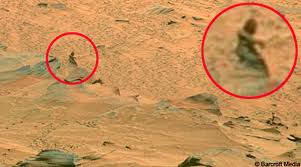
Life on mars


People have always though that there may be life on  another planetThere have been many mission to other planets and The moonOn December  4 1996 the mars pathfinder landed on mars
Scientists have long speculated about the possibility of life on Mars owing to the planet's proximity and similarity to Earth. Although fictional Martians have been a recurring feature of popular entertainment, it remains an open question whether life currently exists on Mars, or has existed there in the past.The indication of life hinges on three important pieces of evidence, all discovered within mineralized fractures in the meteorite in close proximity to each other. One is the discovery of abundant polycyclic aromatic  


hydrocarbons (PAHs) on the fracture surfaces. These are a family of complex organic molecules which are commonly found on dust grains and certain types of meteorites in outer space, presumably formed by non-biological chemical reactions. However, when micro-organisms die they break down into PAHs as well. The mixture of PAHs found on ALH84001 is very different from that found on dust grains and other meteorites, suggesting the possibility of a biological origin. Thousands of different types of PAHs are found all over the Earth, but those in ALH84001 do not appear to be contaminants which have leaked into the meteorite.Another line of evidence involves unusual mineral phases
found beside the PAHs. These carbonate minerals form "globules" about 50 micrometers across, some of which
have cores containing manganese and rings of iron carbonate and iron sulfides, and also contain magnetite
and pyrrhotite. These minerals bear strong resemblance to mineral alterations caused by primitive bacteria onEarth. This diversity of minerals in such a small area,formed under the presumed conditions, seem to make a non-biological origin unlikely.


About mars-life on mars


Named after the Roman god of war, the planet Mars is located four planets from the Sun. Commonly referred to as “The Red Planet,” Mars tends to give off a reddish hue when viewed from Earth. This is believed to be caused by an abundance of iron oxide on the planet’s surface. Mars is about half the size of the Earth. Mars has two moons, Phobos and Deimos, both of which are relatively small in size and not shaped in perfect spheres like the Earth’s moon. Mars can be easily seen from Earth without a telescope at a brightness that is only surpassed by the planet Venus, the Moon and the Sun.


Mars has long been considered the most realistic location for life in our solar system, aside from Earth. Many even believe that intelligent life may have once existed on the planet. Scientific exploration of Mars has not produced any evidence of life on the planet. It is believed that the harsh surface environment and extreme solar radiation that saturates the surface of the planet is not capable of sustaining any kind of life. Before space exploration, Mars was considered the best candidate for harboring extraterrestrial life. Astronomers thought they saw straight lines crisscrossing its surface. This led to the popular belief that irrigation canals on the planet had been constructed by intelligent beings. In 1938, when Orson Welles broadcasted a radio drama based on the science fiction classic War of the Worlds by H.G. Wells, enough people believed in the tale of invading Martians to cause a near panic. The average recorded temperature on Mars is -63° C (-81° F) with a maximum temperature of 20° C (68° F) and a minimum of -140° C (-220° F).


Barometric pressure varies at each landing site on a semiannual basis. Carbon dioxide, the major constituent of the atmosphere, freezes out to form an immense polar cap, alternately at each pole. The carbon dioxide forms a great cover of snow and then evaporates again with the coming of spring in each hemisphere. When the southern cap was largest, the mean daily pressure observed by Viking Lander 1 was as low as 6.8 millibars; at other times of the year it was as high as 9.0 millibars. The pressures at the Viking Lander 2 site were 7.3 and 10.8 millibars. In comparison, the average pressure of the Earth is 1000 millibars.